แบนเนอร์
บ้าน

ห้องช็อกความร้อน

ห้องช็อกความร้อน

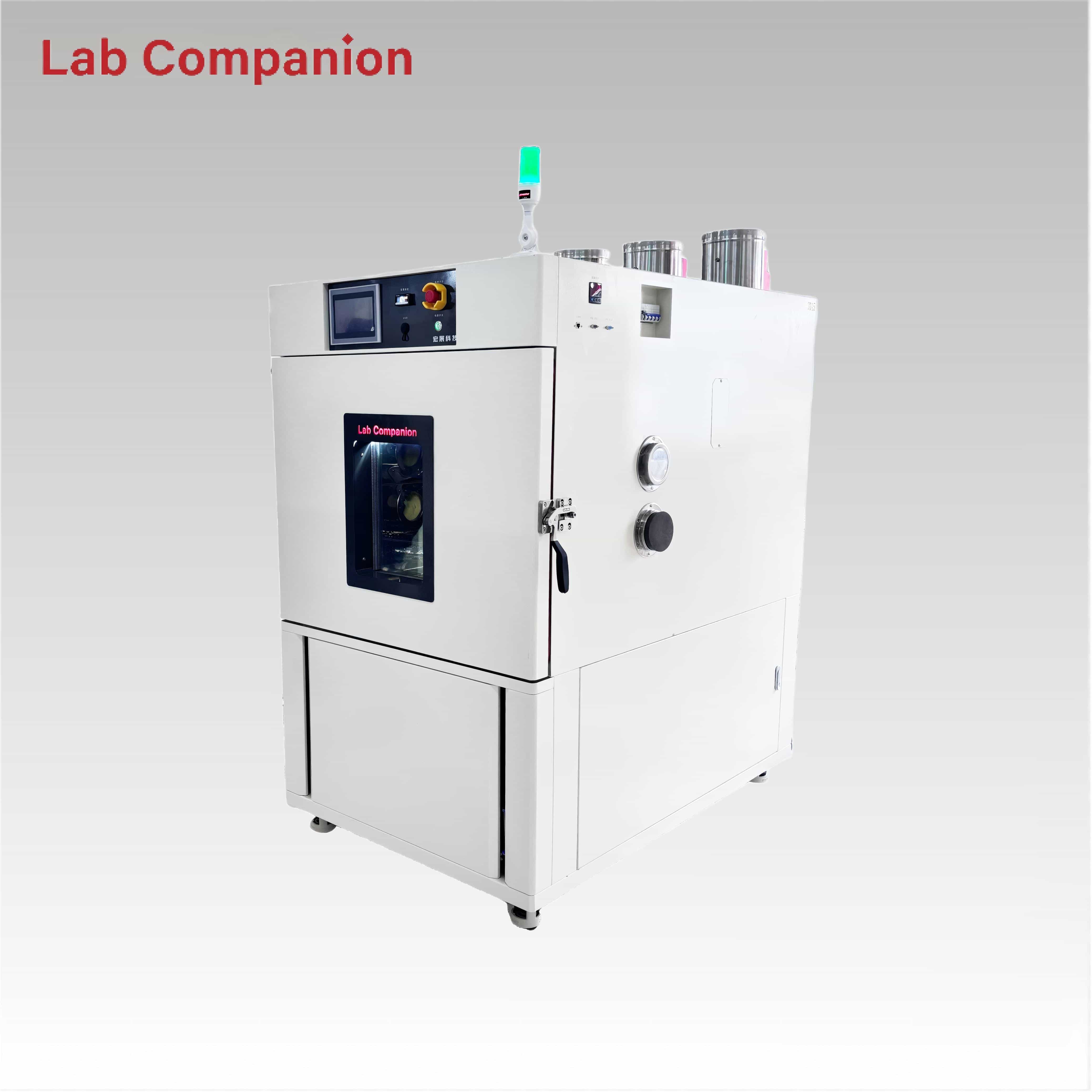
  • GR-1221-CORE Compliant Temperature Cycling Test Solution for Passive Optical Devices | Lab Companion TS Thermal Shock Chamber
    Aug 15, 2026
    1. Overview: The Importance of GR-1221-CORE for Passive Optical Component Reliability Passive optical devices, including optical splitters, WDM components, fiber couplers, and fiber connectors, serve as fundamental building blocks for optical communication transmission systems. As the industry’s authoritative reliability specification,GR-1221-CORE defines a complete set of environmental stress screening criteria for passive optical components, in which temperature cycling is one of the most critical reliability test procedures. A passive optical component consists of multiple materials such as optical fiber, adhesive resin, metal base, and plastic housing. Each material features a different coefficient of thermal expansion (CTE). Under rapid temperature transition, inconsistent thermal expansion and contraction generates continuous thermo-mechanical stress inside the device. This commonly leads to typical failures such as adhesive cracking, fiber delamination, coupling offset, and excessive insertion loss drift. To eliminate latent packaging defects and prevent early field failures, mainstream optical component manufacturers worldwide adopt GR-1221-CORE temperature cycling as a mandatory factory quality control procedure. The Lab Companion TS Series Thermal Shock Chamber is fully optimized and calibrated to meet GR-1221-CORE test requirements, providing standardized hardware, programmable test recipes, and custom fixture solutions for passive optical component reliability validation. 2. Industry Challenges in Traditional Temperature Cycling Testing Conventional thermal shock equipment often fails to meet the strict screening standards of GR-1221-CORE, resulting in insufficient stress excitation, poor test repeatability, and unstable batch testing. The main pain points are summarized as follows: 2.1 Insufficient Temperature Switching Speed GR-1221-CORE requires rapid temperature transition to generate effective thermo-mechanical stress that simulates long-term ambient temperature fatigue. Ordinary chambers feature slow cavity switching and gentle temperature gradients, which cannot produce enough stress to expose micro-cracks, weak bonding, and latent assembly defects. This leads to undetected risks and early product failure after shipment. 2.2 Poor Temperature Uniformity Causes Unstable Test Results Precision passive components such as fiber couplers and array gratings are highly sensitive to ambient temperature variation. Many standard chambers suffer from uneven airflow and large spatial temperature deviations. Samples in different positions undergo inconsistent thermal stress, causing uneven defect excitation and poor test repeatability. This often results in failure during third-party certification audits. 2.3 Lack of Custom Fixtures for Diverse Component Types Passive optical devices cover a wide range of shapes and sizes, including miniature connectors, block-shaped WDM devices, multi-channel splitters, and planar optical chips. Generic sample trays cannot fit all component specifications, easily blocking internal airflow, exacerbating temperature inconsistency, and causing fiber bending damage during testing, which introduces artificial test errors. 2.4 Low Long-Term Stability and Insufficient After-Sales Support GR-1221-CORE temperature cycling requires hundreds of continuous hot-cold cycles, demanding high durability from refrigeration systems, fans, and control modules. Most conventional equipment is not designed for long-duration high-load operation and is prone to downtime. In addition, limited global service coverage leads to long maintenance cycles, severely affecting mass production QC schedules. 3. Lab Companion TS Series Core Hardware Advantages for GR-1221-CORE Compliance The Lab Companion TS Thermal Shock Chamber is professionally optimized for optical component reliability testing. All performance parameters fully comply with GR-1221-CORE stress screening standards, delivering stable, repeatable, and certification-ready temperature cycling tests. 3.1 High-Precision Wide-Range Temperature Control The chamber supports a wide temperature range of -70℃ to +150℃ and achieves ≤10 seconds hot/cold cavity switching, satisfying the rapid temperature transition requirements of GR-1221-CORE. The optimized air circulation structure ensures excellent temperature uniformity throughout the chamber, enabling identical stress conditions for every sample. Users can freely set linear temperature change rates from 5℃/min to 25℃/min to match different component sensitivity levels. 3.2 Customized Dedicated Test Fixtures Lab Companion provides customized fixture solutions for all types of passive optical components, including precision positioning jigs for fiber connectors, dedicated racks for WDM devices, and multi-layer trays for optical splitters. Custom fixtures standardize sample placement, protect optical fibers from bending damage, and maintain unobstructed internal airflow, effectively eliminating temperature deviation and human-induced test errors. 3.3 Programmable Multi-Recipe Storage for Batch Testing The intelligent touch control system supports saving multiple sets of GR-1221-CORE test profiles. Users can independently configure and store high-temperature dwell time, low-temperature dwell time, and cycle counts for connectors, couplers, AWG devices, and other products. One-click recipe calling eliminates repeated parameter setup, greatly improving testing efficiency for mass production. 4. Full-Category Test Implementation for Passive Optical Components Lab Companion TS chambers enable standardized GR-1221-CORE temperature cycling screening for the full range of passive optical components: • Fiber Connectors: Verify the reliability of plastic housings and ceramic ferrules under alternating thermal stress to detect assembly gaps and structural defects. • Optical Splitters & Couplers: Evaluate the thermal fatigue resistance of epoxy adhesive layers to prevent delamination and cracking during long-term service. • AWG & Planar Optical Chips: Adopt controllable low-rate temperature ramping to apply uniform and mild thermal stress, protecting ultra-precision optical structures while completing standard reliability screening. All test procedures strictly follow GR-1221-CORE specifications for cycle times, temperature thresholds, and dwell durations, and have been widely deployed in optical component manufacturing laboratories. 5. Lab Companion Global Technical & Service Support 5.1 Global Service Network Lab Companion maintains a global service layout, providing fast on-site commissioning, fixture customization, calibration, and after-sales maintenance. Rapid response support minimizes equipment downtime and ensures continuous batch reliability testing. 5.2 Professional GR-1221-CORE Technical Guidance Our technical team is fully experienced in GR-1221-CORE test specifications. We provide professional parameter configuration, procedure optimization, and test standard guidance to help customers build fully compliant laboratory systems and pass third-party certification smoothly. 5.3 Complete Environmental Test Equipment Portfolio Beyond thermal shock chambers, Lab Companion offers a full lineup of environmental test equipment, including rapid temperature change chambers, constant temperature & humidity chambers, and walk-in environmental rooms. Our solutions cover GR-1221-CORE high-temperature aging, humidity endurance, and other environmental tests, and also support GR-468-CORE active component validation, providingone-stop reliability testing solutions for both active and passive optical devices. 6. Conclusion Temperature cycling screening defined by GR-1221-CORE is the most essential procedure to eliminate latent structural and adhesive defects of passive optical components and ensure long-term field reliability. Equipped with ultra-fast cavity switching, wide temperature range, high uniformity airflow design, custom fixture solutions, and intelligent programmable control, the Lab Companion TS Series Thermal Shock Chamber delivers fully GR-1221-CORE compliant reliability testing for passive optical components. Supported by global after-sales service and professional technical capabilities, Lab Companion helps optical communication manufacturers standardize quality control procedures and stabilize product reliability for global market delivery.
    อ่านเพิ่มเติม

  • LabCompanion® Rapid Temperature Change Chamber vs. Thermal Shock Chamber: Principle Differences & Application Guidelines LabCompanion® Rapid Temperature Change Chamber vs. Thermal Shock Chamber: Principle Differences & Application Guidelines
    Feb 27, 2026
    In environmental simulation testing, Rapid Temperature Change Chambers and Thermal Shock Chambers are both critical for verifying product reliability under temperature stress. However, many customers choose the wrong equipment due to unclear working principles and application scenarios: • Simulating natural gradual temperature changes with a thermal shock chamber → test results do not reflect real working conditions. • Testing resistance to instantaneous temperature shock with a rapid temperature change chamber → fails to meet test requirements. Wrong selection wastes investment, delays R&D, and weakens market competitiveness. Based on more than 20 years of industry experience, LabCompanion® explains the core differences between these two chambers to help you select the right equipment for your application. I. Core Principle Differences 1. Rapid Temperature Change Chamber Single-chamber design · Continuous & gradual temperature change • The entire test is performed in one single test space. • Heating and cooling systems work together to provide smooth, continuous, adjustable temperature ramping. • Temperature change rate: 5–20°C/min (higher rates available upon request). • LabCompanion® advantage: Binary cascade refrigeration, high-efficiency heating, and dual PID + AI intelligent control for stable, precise ramping without sudden fluctuations. • Simulates real-world natural temperature cycles. 2. Thermal Shock Chamber Multi-chamber design · Instant temperature switching • Typically 3 independent zones (hot chamber, cold chamber, test area); 2-zone models also available. • Test samples are rapidly transferred between hot and cold environments with no gradual ramping. • Temperature shock speed: > 5°C/s (up to 10°C/s for high-performance models). • LabCompanion® advantage: Independent heating & cooling systems, fast-acting valves, and airflow guidance for extreme temperature shock. • Temperature range:         ○ Hot zone: +60°C to +200°C ○ Cold zone: -70°C to 0°C (down to -196°C with liquid nitrogen) II. Key Parameters & Temperature Characteristics Rapid Temperature Change Chamber • Focus parameters: Ramp rate, temperature accuracy ±0.1–±0.5°C, uniformity ≤ ±2°C • Standard range: -70°C to 180°C (customizable to -220°C) • Temperature behavior: Continuous, smooth, gradual • Strength: High precision, uniform temperature field Thermal Shock Chamber • Focus parameters: Shock temperature range-196°C to +200°C, shock speed, recovery time • Temperature behavior: Instant, extreme, non‑gradual change • Strength: Ultra-fast shock, high stability for harsh testing III. Application & Selection Guide Choose Rapid Temperature Change Chamber if: • You need to simulate natural daily/seasonal temperature cycles. • You want to evaluate long-term reliability under repeated gradual temperature changes. • Industries:         ○ Automotive electronics & components ○ Consumer electronics ○ Semiconductors & PCBs ○ General electronic reliability testing Choose Thermal Shock Chamber if: • You need to simulate extreme, instantaneous temperature swings. • You want to expose material weaknesses, cracks, or failures quickly. • Industries: ○ Aerospace ○ Military & defense ○ High-performance alloys ○ Semiconductor packaging ○ Components used in extreme environments IV. LabCompanion® Solutions & Services 1. Dual-Mode Customization For customers needing both temperature cycling AND thermal shock, LabCompanion® provides customized dual-mode systems that support:      Single-chamber rapid temperature changeDual-chamber thermal shock      in one integrated unit, reducing cost and space.     2. Compliance & Quality All LabCompanion® chambers meet international and national standards, providing reliable alternatives to imported equipment at a competitive cost. 3. Global Service Support • Professional one-on-one application & selection support • Comprehensive after-sales guidance service (2-hour response) to assist with installation, calibration, maintenance, and training remotely • Full lifecycle support: professional guidance for installation, calibration, maintenance, and technical training V. Summary – How to Choose • Simulate real natural temperature changes → Rapid Temperature Change Chamber • Test resistance to extreme instant temperature shock → Thermal Shock Chamber LabCompanion® provides professional, reliable environmental test solutions to support your product R&D and quality assurance.
    อ่านเพิ่มเติม
  • สรุปเงื่อนไขการทดสอบ LED
    Apr 22, 2025
    LED คืออะไร? ไดโอดเปล่งแสง (Light Emitting Diode หรือ LED) คือไดโอดชนิดพิเศษที่เปล่งแสงสีเดียวไม่ต่อเนื่องเมื่อจ่ายแรงดันไฟฟ้าไปข้างหน้า ซึ่งเป็นปรากฏการณ์ที่เรียกว่า อิเล็กโตรลูมิเนสเซนซ์ โดยการเปลี่ยนแปลงองค์ประกอบทางเคมีของวัสดุเซมิคอนดักเตอร์ LED สามารถผลิตแสงใกล้ระดับอัลตราไวโอเลต แสงที่มองเห็นได้ หรือแสงอินฟราเรด ในตอนแรก LED ถูกใช้เป็นไฟแสดงสถานะและแผงจอแสดงผลเป็นหลัก อย่างไรก็ตาม ด้วยการถือกำเนิดของ LED สีขาว ปัจจุบัน LED ยังถูกนำไปใช้ในแอพพลิเคชั่นแสงสว่างด้วย LED ได้รับการยอมรับว่าเป็นแหล่งกำเนิดแสงแห่งศตวรรษที่ 21 โดยมีข้อได้เปรียบที่ไม่มีใครเทียบได้ เช่น ประสิทธิภาพสูง อายุการใช้งานยาวนาน และความทนทานเมื่อเทียบกับแหล่งกำเนิดแสงแบบดั้งเดิม การแบ่งประเภทตามความสว่าง: LED ความสว่างมาตรฐาน (ทำจากวัสดุเช่น GaP, GaAsP) LED ความสว่างสูง (ผลิตจาก AlGaAs) LED ความสว่างสูงพิเศษ (ทำจากวัสดุขั้นสูงอื่นๆ) ☆ ไดโอดอินฟราเรด (IRED) ปล่อยแสงอินฟราเรดที่มองไม่เห็นและใช้สำหรับแอปพลิเคชันที่แตกต่างกัน   ภาพรวมการทดสอบความน่าเชื่อถือของ LED: LED ถูกพัฒนาขึ้นครั้งแรกในช่วงทศวรรษ 1960 และในช่วงแรกนั้น LED ถูกนำมาใช้เป็นไฟสัญญาณจราจรและผลิตภัณฑ์สำหรับผู้บริโภค จนกระทั่งในช่วงไม่กี่ปีที่ผ่านมา LED จึงได้รับการนำมาใช้เป็นไฟส่องสว่างและเป็นแหล่งกำเนิดแสงทางเลือก หมายเหตุเพิ่มเติมเกี่ยวกับอายุการใช้งาน LED: ยิ่งอุณหภูมิที่จุดเชื่อมต่อ LED ต่ำ อายุการใช้งานก็จะยิ่งยาวนานขึ้น และในทางกลับกัน อายุการใช้งานของ LED ภายใต้อุณหภูมิสูง: 10,000 ชั่วโมงที่ 74°C 25,000 ชั่วโมงที่ 63°C เนื่องจากเป็นผลิตภัณฑ์ทางอุตสาหกรรม แหล่งกำเนิดแสง LED จะต้องมีอายุการใช้งาน 35,000 ชั่วโมง (รับประกันเวลาการใช้งาน) หลอดไฟแบบดั้งเดิมโดยทั่วไปมีอายุการใช้งานประมาณ 1,000 ชั่วโมง คาดว่าไฟถนน LED จะมีอายุการใช้งานมากกว่า 50,000 ชั่วโมง สรุปเงื่อนไขการทดสอบ LED: การทดสอบแรงกระแทกจากอุณหภูมิ อุณหภูมิช็อก 1 อุณหภูมิห้อง อุณหภูมิช็อก 2 ระยะเวลาการฟื้นตัว วงจร วิธีการช็อกไฟฟ้า หมายเหตุ -20℃(5 นาที) 2 90℃(5 นาที)   2 โช๊คแก๊ส   -30℃(5 นาที) 5 105℃(5 นาที)   10 โช๊คแก๊ส   -30℃(30 นาที)   105℃(30 นาที)   10 โช๊คแก๊ส   88℃(20 นาที)   -44℃(20 นาที)   10 โช๊คแก๊ส   100℃(30 นาที)   -40℃(30 นาที)   30 โช๊คแก๊ส   100℃(15 นาที)   -40℃(15 นาที) 5 300 โช๊คแก๊ส ไฟ LED แบบ HB 100℃ (5 นาที)   -10℃(5 นาที)   300 ของเหลวช็อก ไฟ LED แบบ HB   การทดสอบ LED อุณหภูมิสูง ความชื้นสูง (THB Test) อุณหภูมิ/ความชื้น เวลา หมายเหตุ 40℃/ความชื้นสัมพัทธ์ 95% 96 ชั่วโมง   60℃/ความชื้นสัมพัทธ์ 85% 500 ชั่วโมง การทดสอบอายุการใช้งานของ LED 60℃/ความชื้นสัมพัทธ์ 90% 1,000 ชั่วโมง การทดสอบอายุการใช้งานของ LED 60℃/ความชื้นสัมพัทธ์ 95% 500 ชั่วโมง การทดสอบอายุการใช้งานของ LED 85℃/ความชื้นสัมพัทธ์ 85% 50 ชั่วโมง   85℃/ความชื้นสัมพัทธ์ 85% 1,000 ชั่วโมง การทดสอบอายุการใช้งานของ LED   การทดสอบอายุการใช้งานที่อุณหภูมิห้อง 27℃ 1,000 ชั่วโมง การส่องสว่างต่อเนื่องด้วยกระแสไฟคงที่   การทดสอบอายุการใช้งานที่อุณหภูมิสูง (การทดสอบ HTOL) 85℃ 1,000 ชั่วโมง การส่องสว่างต่อเนื่องด้วยกระแสไฟคงที่ 100℃ 1,000 ชั่วโมง การส่องสว่างต่อเนื่องด้วยกระแสไฟคงที่   การทดสอบอายุการใช้งานที่อุณหภูมิต่ำ (การทดสอบ LTOL) -40℃ 1,000 ชั่วโมง การส่องสว่างต่อเนื่องด้วยกระแสไฟคงที่ -45℃ 1,000 ชั่วโมง การส่องสว่างต่อเนื่องด้วยกระแสไฟคงที่   การทดสอบความสามารถในการบัดกรี เงื่อนไขการทดสอบ หมายเหตุ พินของ LED (ห่างจากด้านล่างของคอลลอยด์ 1.6 มม.) จะถูกจุ่มลงในอ่างดีบุกที่อุณหภูมิ 260 °C เป็นเวลา 5 วินาที   พินของ LED (ห่างจากด้านล่างของคอลลอยด์ 1.6 มม.) จะถูกจุ่มลงในอ่างดีบุกที่อุณหภูมิ 260+5 °C เป็นเวลา 6 วินาที   พินของ LED (ห่างจากด้านล่างของคอลลอยด์ 1.6 มม.) จะถูกจุ่มลงในอ่างดีบุกที่อุณหภูมิ 300 °C เป็นเวลา 3 วินาที     การทดสอบเตาบัดกรีแบบรีโฟลว์ 240℃ 10 วินาที   การทดสอบสิ่งแวดล้อม (ดำเนินการบัดกรี TTW เป็นเวลา 10 วินาทีที่อุณหภูมิ 240 °C ± 5 °C) ชื่อการทดสอบ มาตรฐานอ้างอิง ดูเนื้อหาของเงื่อนไขการทดสอบใน JIS C 7021 การกู้คืน จำนวนรอบ (H) การปั่นจักรยานอุณหภูมิ ข้อมูลจำเพาะยานยนต์ -40 °C ←→ 100 °C โดยมีระยะเวลาพัก 15 นาที 5 นาที 5/50/100 การปั่นจักรยานอุณหภูมิ   60 °C/95% RH เมื่อใช้กระแสไฟ   50/100 ความชื้นแบบอคติย้อนกลับ วิธีการ MIL-STD-883 60 องศาเซลเซียส/ความชื้นสัมพัทธ์ 95%, 5 โวลต์   50/100  
    อ่านเพิ่มเติม
  • วิธีการทดสอบสิ่งแวดล้อม
    Mar 15, 2025
    "การทดสอบสิ่งแวดล้อม" หมายถึงกระบวนการเปิดเผยผลิตภัณฑ์หรือวัสดุต่อสภาพแวดล้อมตามธรรมชาติหรือเทียมภายใต้พารามิเตอร์ที่กำหนด เพื่อประเมินประสิทธิภาพภายใต้เงื่อนไขการจัดเก็บ การขนส่ง และการใช้งานที่เป็นไปได้ การทดสอบสิ่งแวดล้อมสามารถแบ่งได้เป็น 3 ประเภท ได้แก่ การทดสอบโดยการสัมผัสตามธรรมชาติ การทดสอบภาคสนาม และการทดสอบจำลองด้วยเทียม การทดสอบสองประเภทแรกนั้นมีค่าใช้จ่ายสูง ใช้เวลานาน และมักไม่สามารถทำซ้ำได้และสม่ำเสมอ อย่างไรก็ตาม การทดสอบเหล่านี้ให้ภาพสะท้อนที่แม่นยำกว่าของเงื่อนไขการใช้งานในโลกแห่งความเป็นจริง ทำให้เป็นรากฐานของการทดสอบจำลองด้วยเทียม การทดสอบสิ่งแวดล้อมด้วยจำลองด้วยเทียมใช้กันอย่างแพร่หลายในการตรวจสอบคุณภาพ เพื่อให้แน่ใจว่าผลการทดสอบสามารถเปรียบเทียบและทำซ้ำได้ จึงได้มีการกำหนดวิธีมาตรฐานสำหรับการทดสอบสิ่งแวดล้อมพื้นฐานของผลิตภัณฑ์ ด้านล่างนี้เป็นวิธีการทดสอบสิ่งแวดล้อมที่สามารถทำได้โดยใช้ ห้องทดสอบสิ่งแวดล้อม:(1) การทดสอบอุณหภูมิสูงและต่ำ: ใช้ในการประเมินหรือกำหนดความสามารถในการปรับตัวของผลิตภัณฑ์ในการจัดเก็บและ/หรือการใช้งานภายใต้สภาวะอุณหภูมิสูงและต่ำ (2) การช็อกจากความร้อน การทดสอบ: กำหนดความสามารถในการปรับตัวของผลิตภัณฑ์ต่อการเปลี่ยนแปลงอุณหภูมิเพียงครั้งเดียวหรือหลายครั้ง และความสมบูรณ์ของโครงสร้างภายใต้เงื่อนไขเหล่านั้น (3) การทดสอบความร้อนชื้น: ใช้เป็นหลักในการประเมินความสามารถในการปรับตัวของผลิตภัณฑ์ต่อสภาวะความร้อนชื้น (มีหรือไม่มีการควบแน่น) โดยเน้นที่การเปลี่ยนแปลงในประสิทธิภาพทางไฟฟ้าและเชิงกลโดยเฉพาะ นอกจากนี้ยังสามารถประเมินความต้านทานของผลิตภัณฑ์ต่อการกัดกร่อนบางประเภทได้อีกด้วย การทดสอบความร้อนในสภาวะชื้นอย่างต่อเนื่อง: โดยทั่วไปจะใช้กับผลิตภัณฑ์ที่การดูดซับความชื้นเป็นกลไกหลัก โดยไม่มีผลต่อการหายใจอย่างมีนัยสำคัญ การทดสอบนี้จะประเมินว่าผลิตภัณฑ์สามารถรักษาประสิทธิภาพทางไฟฟ้าและทางกลที่จำเป็นภายใต้สภาวะอุณหภูมิและความชื้นสูงได้หรือไม่ หรือวัสดุปิดผนึกและฉนวนสามารถให้การป้องกันที่เพียงพอหรือไม่ การทดสอบความร้อนแบบชื้นเป็นวงจร: การทดสอบสภาพแวดล้อมแบบเร่งรัดเพื่อพิจารณาความสามารถในการปรับตัวของผลิตภัณฑ์ต่อการเปลี่ยนแปลงอุณหภูมิและความชื้นแบบเป็นวงจร ซึ่งมักส่งผลให้เกิดการควบแน่นบนพื้นผิว การทดสอบนี้ใช้ประโยชน์จากเอฟเฟกต์ "การหายใจ" ของผลิตภัณฑ์อันเนื่องมาจากการเปลี่ยนแปลงอุณหภูมิและความชื้นเพื่อเปลี่ยนระดับความชื้นภายใน ผลิตภัณฑ์จะผ่านรอบของการให้ความร้อน อุณหภูมิสูง ความเย็น และอุณหภูมิต่ำในห้องความร้อนแบบชื้นเป็นวงจร ทำซ้ำตามข้อกำหนดทางเทคนิค การทดสอบความร้อนชื้นที่อุณหภูมิห้อง: ดำเนินการภายใต้อุณหภูมิมาตรฐานและสภาวะความชื้นสัมพัทธ์สูง (4) การทดสอบการกัดกร่อน:ประเมินความต้านทานของผลิตภัณฑ์ต่อการกัดกร่อนของน้ำเกลือหรือบรรยากาศอุตสาหกรรม ซึ่งใช้กันอย่างแพร่หลายในอุตสาหกรรมไฟฟ้า อิเล็กทรอนิกส์ อุตสาหกรรมเบา และผลิตภัณฑ์โลหะ การทดสอบการกัดกร่อนรวมถึงการทดสอบการกัดกร่อนจากการสัมผัสบรรยากาศและการทดสอบการกัดกร่อนเร่งด้วยเทียม เพื่อย่นระยะเวลาการทดสอบ จึงมักใช้การทดสอบการกัดกร่อนเร่งด้วยเทียม เช่น การทดสอบการพ่นเกลือเป็นกลาง การทดสอบการพ่นเกลือจะประเมินความต้านทานการกัดกร่อนของสารเคลือบตกแต่งป้องกันในสภาพแวดล้อมที่มีเกลือเป็นหลัก และประเมินคุณภาพของสารเคลือบต่างๆ (5) การทดสอบแม่พิมพ์: ผลิตภัณฑ์ที่เก็บไว้หรือใช้ในสภาพแวดล้อมที่มีอุณหภูมิและความชื้นสูงเป็นเวลานานอาจเกิดเชื้อราบนพื้นผิวได้ เส้นใยของเชื้อราสามารถดูดซับความชื้นและหลั่งกรดอินทรีย์ ทำให้คุณสมบัติในการเป็นฉนวนลดลง ลดความแข็งแรง ลดคุณสมบัติทางแสงของกระจก เร่งการกัดกร่อนของโลหะ และทำให้ผลิตภัณฑ์มีลักษณะแย่ลง ซึ่งมักมาพร้อมกับกลิ่นที่ไม่พึงประสงค์ การทดสอบเชื้อราจะประเมินระดับการเติบโตของเชื้อราและผลกระทบต่อประสิทธิภาพและการใช้งานของผลิตภัณฑ์ (6) การทดสอบการปิดผนึก: กำหนดความสามารถของผลิตภัณฑ์ในการป้องกันการเข้ามาของฝุ่น ก๊าซ และของเหลว การปิดผนึกสามารถเข้าใจได้ว่าเป็นความสามารถในการป้องกันของตัวหุ้มผลิตภัณฑ์ มาตรฐานสากลสำหรับตัวหุ้มผลิตภัณฑ์ไฟฟ้าและอิเล็กทรอนิกส์ประกอบด้วยสองประเภท ได้แก่ การป้องกันอนุภาคแข็ง (เช่น ฝุ่น) และการป้องกันของเหลวและก๊าซ การทดสอบฝุ่นจะตรวจสอบประสิทธิภาพการปิดผนึกและความน่าเชื่อถือในการใช้งานของผลิตภัณฑ์ในสภาพแวดล้อมที่มีทรายหรือฝุ่นละออง การทดสอบการปิดผนึกก๊าซและของเหลวจะประเมินความสามารถของผลิตภัณฑ์ในการป้องกันการรั่วไหลภายใต้เงื่อนไขที่รุนแรงกว่าสภาพการทำงานปกติ (7) การทดสอบการสั่นสะเทือน: ประเมินความสามารถในการปรับตัวของผลิตภัณฑ์ต่อการสั่นสะเทือนแบบไซน์หรือแบบสุ่ม และประเมินความสมบูรณ์ของโครงสร้าง โดยผลิตภัณฑ์จะยึดไว้บนโต๊ะทดสอบการสั่นสะเทือนและอยู่ภายใต้การสั่นสะเทือนตามแกนตั้งฉากกันสามแกน (8) การทดสอบความชรา: ประเมินความต้านทานของผลิตภัณฑ์วัสดุโพลีเมอร์ต่อสภาพแวดล้อม โดยการทดสอบการเสื่อมสภาพจะแตกต่างกันไปตามสภาพแวดล้อม เช่น การทดสอบการเสื่อมสภาพในบรรยากาศ การทดสอบการเสื่อมสภาพด้วยความร้อน และการทดสอบการเสื่อมสภาพด้วยโอโซน การทดสอบความเสื่อมสภาพตามบรรยากาศ: เกี่ยวข้องกับการนำตัวอย่างไปสัมผัสกับสภาพบรรยากาศกลางแจ้งเป็นระยะเวลาหนึ่ง การสังเกตการเปลี่ยนแปลงประสิทธิภาพ และการประเมินความทนทานต่อสภาพอากาศ การทดสอบควรดำเนินการในสถานที่ที่สัมผัสกับสภาพอากาศกลางแจ้งที่มีสภาพที่รุนแรงที่สุดของสภาพภูมิอากาศเฉพาะ หรือสภาพการใช้งานจริงโดยประมาณ การทดสอบการทำให้เก่าด้วยความร้อน: เกี่ยวข้องกับการวางตัวอย่างไว้ในห้องทำให้เก่าด้วยความร้อนเป็นระยะเวลาที่กำหนด จากนั้นจึงนำออกและทดสอบประสิทธิภาพภายใต้เงื่อนไขด้านสิ่งแวดล้อมที่กำหนด โดยเปรียบเทียบผลลัพธ์กับประสิทธิภาพก่อนการทดสอบ (9) การทดสอบบรรจุภัณฑ์การขนส่ง: ผลิตภัณฑ์ที่เข้าสู่ห่วงโซ่อุปทานมักต้องใช้บรรจุภัณฑ์สำหรับการขนส่ง โดยเฉพาะเครื่องจักรที่มีความแม่นยำ เครื่องมือ เครื่องใช้ในครัวเรือน สารเคมี ผลิตภัณฑ์ทางการเกษตร ยา และอาหาร การทดสอบบรรจุภัณฑ์สำหรับการขนส่งจะประเมินความสามารถของบรรจุภัณฑ์ในการทนต่อแรงกดแบบไดนามิก แรงกระแทก การสั่นสะเทือน แรงเสียดทาน อุณหภูมิ และการเปลี่ยนแปลงความชื้น รวมถึงความสามารถในการป้องกันสิ่งของภายใน  วิธีทดสอบมาตรฐานเหล่านี้รับประกันว่าผลิตภัณฑ์สามารถทนต่อแรงกดดันจากสภาพแวดล้อมต่างๆ ได้ ส่งผลให้มีประสิทธิภาพและความทนทานที่เชื่อถือได้ในการใช้งานจริง
    อ่านเพิ่มเติม

ฝากข้อความ

ฝากข้อความ
หากคุณสนใจผลิตภัณฑ์ของเราและต้องการทราบรายละเอียดเพิ่มเติม โปรดฝากข้อความไว้ที่นี่ เราจะตอบกลับคุณโดยเร็วที่สุด
ส่ง

บ้าน

สินค้า

วอทส์แอพพ์

ติดต่อเรา